Start your project well. Use these five W's
Defining the project is the first and one of the most critical steps in project management. It involves clearly outlining the project's purpose, goals, scope, and deliverables. In this article we will explore how the five W's can help you get started.
1. Why: Understanding the Purpose
Starting a project without a clear understanding of its purpose is like embarking on a journey without a destination. The "why" of a project is its raison d'être, the driving force behind its initiation. It answers the fundamental question: Why are we doing this project? The purpose could be to solve a specific problem, achieve a strategic goal, or meet a market need. For instance, a company might start a project to develop a new product to stay competitive in the market.
Understanding the "why" is crucial for several reasons. First, it provides a clear direction and focus for the project team. Knowing the purpose helps team members align their efforts towards a common goal. Second, it helps in prioritizing tasks and making decisions. When faced with choices or challenges, the project team can refer back to the purpose to guide their actions. Third, a clear purpose helps to secure buy-in and support from stakeholders. When stakeholders understand the value and importance of the project, they are more likely to provide the necessary resources and backing.
Moreover, the "why" serves as a motivational factor. It gives the project team a sense of purpose and meaning, which can boost morale and engagement. When team members know their work matters, they are more committed to the project's success.
To define the "why”, first engage with stakeholders to understand their needs and expectations. Ensure the project aligns with the organization's goals. This can involve workshops, assessments, analysing market trends, or consulting experts. Often, business analysts are brought into the project team to assist in defining the objectives and requirements of the project. Once defined, the purpose should be clearly communicated and documented in the project charter (or mandate), serving as a guiding light throughout the project lifecycle.
2. What: Defining the Scope
Once the purpose is clear, the next step is to define exactly what the project will entail. The "what" of a project refers to its scope, which outlines the boundaries, deliverables, features, and functions. In essence, it answers the question: What are we going to do to achieve the project's purpose?
Defining the scope is critical for several reasons. The scope provides a clear roadmap, outlining what needs to be done. It manages stakeholder expectations. A well-defined scope ensures that everyone is on the same page regarding what the project will and will not include. This reduces the risk of misunderstandings or disputes. It helps control scope creep, the uncontrolled growth of project requirements. This can lead to delays, cost overruns, and project failure.
The ‘MoSCoW’ technique can assist in defining what needs to be done. It stands for:
- Must have,
- Should have,
- Could have,
- Won’t have (for now).
Categorising in this way helps to prioritise what really needs to be done.
The scope should be reviewed and approved by key stakeholders to ensure alignment and buy-in. Once approved, the scope should be baselined and used as a reference point for tracking progress and managing changes. Any changes to the scope should be formally documented and approved through a change control process. It is also important to determine the quality expectations as it can have a huge impact on resources, budget, and timelines. Remember to check if an approved Business Case is needed to access budget and resources.
To further define the scope, break the project outputs up into smaller parts. Use a hierarchical product breakdown structure. It breaks the larger products into smaller components to develop or buy. Document the dependencies between the components. Some must be actioned before others. These smaller components will each have requirements and quality expectations. Use a work breakdown structure (WBS) and detailed product descriptions to document all components.
Below is an example of a product breakdown structure diagram:
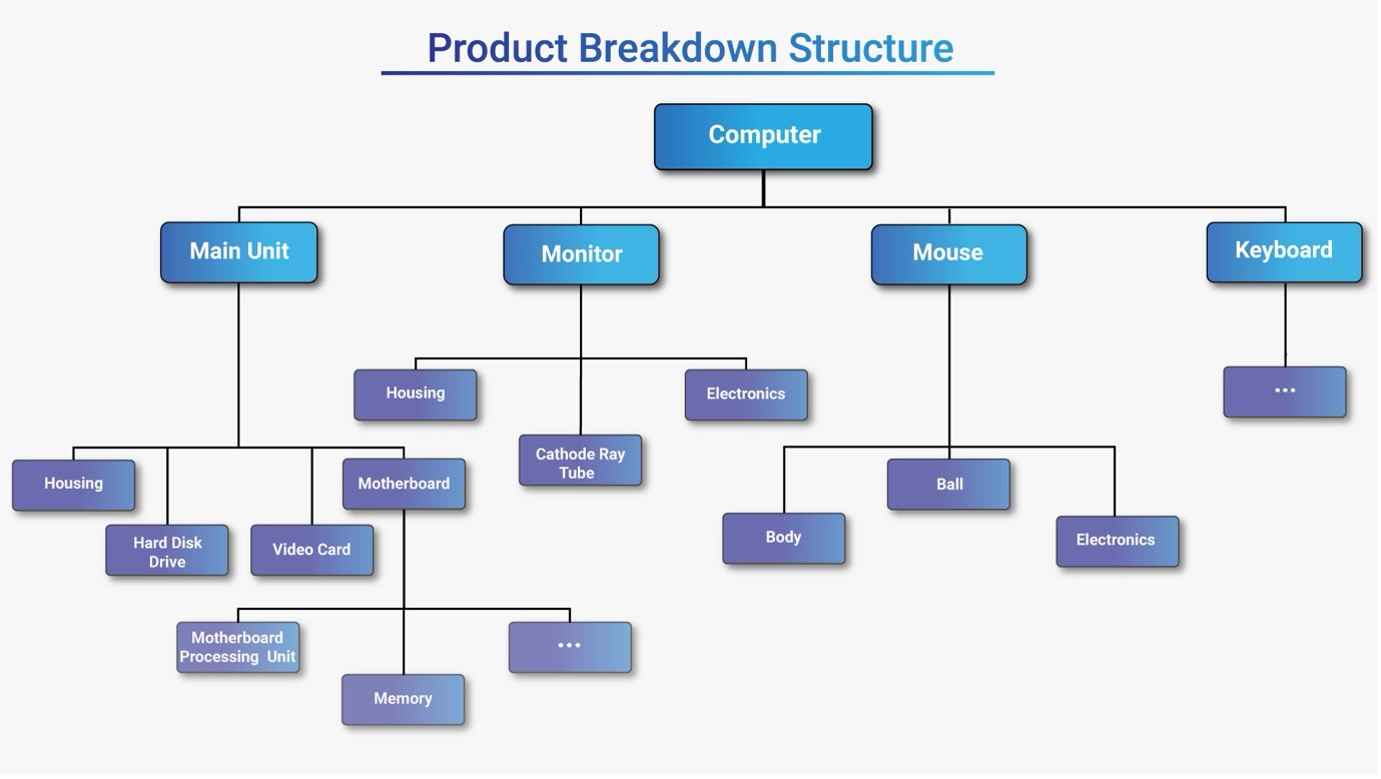
(Image Source: Silicon Beach Training)
3. Way (How): Planning the Approach
After defining what needs to be done, the next step is to determine how it will be done. In what way will we solve the problem or opportunity. The "how" of a project refers to the methods, processes, and approaches used to execute the project. It answers the question: How are we going to accomplish the project's scope?
Planning the approach is crucial for several reasons. It ensures that the project is executed efficiently and effectively. A well-thought-out approach helps optimize resources, reduce waste, and improve productivity. It also helps manage risks and issues. By anticipating problems and planning solutions, the team can reduce their impact on the project's success.
The project approach has two aspects: the way the project will be managed, and the way the outputs or products will be produced.
Identify the project management methodology that best fits the project's nature and complexity. This could be a traditional approach, an agile methodology, or a hybrid approach. Define key project phases, milestones, and decision points. It gives a high-level view of the project's lifecycle and helps manage stakeholder expectations.
Next, plan the project's technical approach. List the methods, tools, and techniques to achieve the project's outputs. This may involve research, consulting experts, or testing approaches to find the best one. The team might buy some parts of the project and develop the rest in-house.
Finally, adjust the WBS, product breakdown structure and descriptions to the approved approach.
4. When: Scheduling the Timeline
After planning the approach, the next step is to determine when to execute the project. A project's "when" is its timeline. It outlines the start and end dates, durations, and sequence of tasks and activities.
Scheduling the timeline is crucial for several reasons. It gives a clear timetable for the project. This helps the team stay on track and meet deadlines. A well-defined timeline ensures that tasks are completed in the right order and at the right time. This can prevent delays and bottlenecks.
Second, it helps manage stakeholder expectations. By communicating the project's timeline, stakeholders can plan their activities and resources accordingly. This will reduce the risk of conflicts or misunderstandings.
Third, it aids in resource allocation and levelling. Knowing when tasks need to be completed, the project team can allocate resources more effectively, avoiding overallocation or underutilization.
There are many ways to schedule the tasks on the timeline. You can start populating the timeline with tasks as soon as the project can start (or it might have started already). Build the work and output to get to a completion date. Alternatively, you can build the timeline from the delivery dates of milestones. Work backwards to the start dates. You must be creative, no matter the method you use. If you can't meet deadlines or have resource limitations, you may need to rethink the agreed approach.
My preferred method uses the product breakdown structure and WBS to build the timeline. The first step is to convert the product breakdown into a product flow diagram. This captures the correct sequence of tasks with their dependencies. Transfer the tasks from the flow sequence to a Gantt chart. Only when all tasks are on the timeline can you know if the project will finish on time.
Also, the timeline should have buffers to protect key milestones against risks that may delay the project.
Below is an example of a project schedule or timeline:
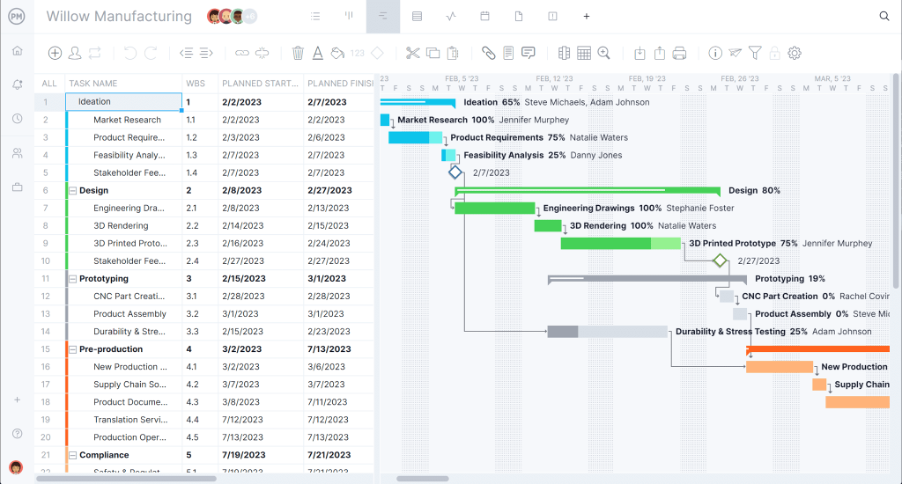 (Image source: projectmanager.com)
5. Who: Assembling the Team
Finally, with the timeline in place, the next step is to determine who will execute the project. The "who" of a project is its team. It includes those responsible for planning, executing, and delivering all activities and tasks. It answers the question: Who is going to accomplish the project's outputs?
Assembling the right team is crucial for success. The project manager must ensure that the project has the right skills, knowledge, and experience to achieve its goals. To assemble the team, start by identifying the roles and responsibilities required to execute the project tasks. Define the skills, knowledge, and experience required for each role. Create job descriptions or role profiles. They should outline the needed qualifications and skills.
Organize the team in a way that promotes effective communication and collaboration. Create a project org chart. It should outline the team's structure, reporting lines, and communication channels. It's also important to establish a team culture that encourages open communication, trust, and mutual respect.
Update the project plan/schedule with the team members as resources for all tasks. You may need to adjust to team members' availability and avoid over-allocation. Verify that the expected project completion date is still achievable.
Lastly, the team should be properly onboarded and trained. This will ensure they have the tools and knowledge to execute the project.
By addressing the five "W's" at the start of a project, you can ensure that your project is well-defined, well-planned, and ready to execute well.